Summer Events Bring Big Local Business Energy. Is Your Insurance Keeping Up?
Ellen Fenton & Company Insurance
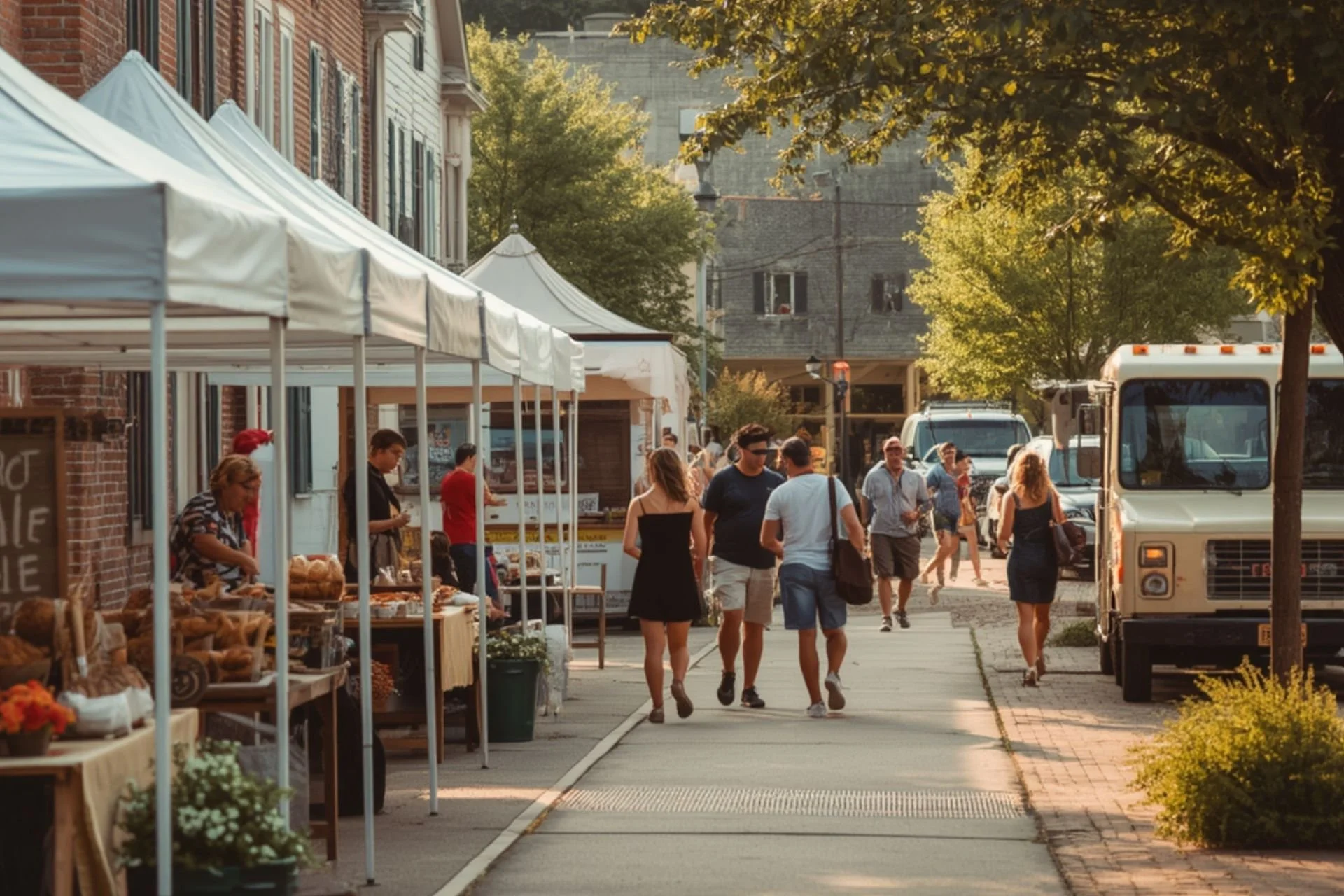
Summer in Western New York has its own kind of energy.
The tents go up. The food trucks roll in. Village sidewalks get busier. Farmers markets fill with fresh produce, baked goods, flowers, maple products, handmade pieces, and local makers. Music starts playing outside. Patios open. Weekend calendars fill up fast.
From Ellicottville and Olean to Salamanca, Little Valley, Springville, Jamestown, Lakewood, and the communities in between, summer brings more than good weather. It brings opportunity for local businesses.
For shops, vendors, makers, food businesses, farms, nonprofits, service providers, and seasonal operations, summer is often when business starts moving outside.
And when your business starts showing up in different places, the insurance conversation can change too.
Not because anything is wrong.
Because every setup is a little different.
Summer Business Has a Lot of Moving Parts
One of the best parts about Western New York is how many local businesses show up for the community during the warmer months.
A boutique might set up at a village event. A farm might sell produce at a local market. A food truck might serve lunch at a fundraiser. A bakery might offer samples under a tent. A local maker might sell handmade goods at a festival. A nonprofit might host an outdoor event.
Each setup is normal for the season, but the details still matter.
Selling from your storefront is different than setting up a booth at a market. Attending an event as a vendor is different than hosting the event yourself. Serving prepared food is different than selling packaged products.
That is where a practical insurance conversation can help.
A Few Questions Worth Asking
Before the summer calendar gets too full, it helps to think through a few details:
Where will your business be operating?
What will you be doing there?
Who will be helping you?
What equipment, inventory, signage, tents, tables, coolers, trailers, payment systems, or supplies are you bringing with you?
Has the event organizer, venue, municipality, landlord, or market manager asked for proof of insurance?
These are everyday business details, but they can shape what your policy needs to account for.
Do You Need a Certificate of Insurance?
If you participate in markets, festivals, pop-ups, fundraisers, or outdoor events, you may eventually be asked for a certificate of insurance.
A certificate of insurance is a document that shows proof of coverage. Event organizers, venues, municipalities, landlords, or market managers may request one before allowing a vendor or business to set up.
The best time to ask about a certificate is not the night before an event. It is when you are planning your calendar, filling out vendor applications, and getting your summer schedule organized.
That way, if someone asks for documentation, you already know who to call and what information may be needed.
Local Business Moves Fast in the Summer
In communities like Ellicottville, Olean, Salamanca, Little Valley, Springville, Jamestown, Lakewood, and across Cattaraugus and Chautauqua County, summer business can move quickly.
A weekend might include a storefront rush, a vendor booth, a catering job, a market setup, a fundraiser, a delivery, an outdoor display, or a festival crowd.
Your business may have added new products. You may be attending more events. You may have purchased new equipment. You may be using a trailer. You may have hired seasonal help. You may be participating in larger community events than you have in the past.
None of that means you are doing anything wrong.
It simply means your business is growing, shifting, and showing up in new ways.
A Practical Conversation Can Go a Long Way
At Ellen Fenton & Company, we believe insurance should feel understandable.
For local business owners, that means having a real conversation about what you do, where you do it, who is involved, and what details may need to be accounted for.
If your summer calendar includes farmers markets, festivals, outdoor events, pop-ups, fundraisers, seasonal sales, vendor shows, or community events, give us a call.
Bring in your current policy, tell us what you have coming up, and let’s talk through it.
A little clarity before the season gets busy can make the business side of summer feel a whole lot smoother.


Homeowners insurance can become outdated as your home changes. Here are five common questions Western New York homeowners should ask about renovations, finished basements, detached structures, water damage, and changes in property use.