Fall Home Checklist for Western New York Homeowners: What to Check Before Winter
Ellen Fenton & Company Insurance
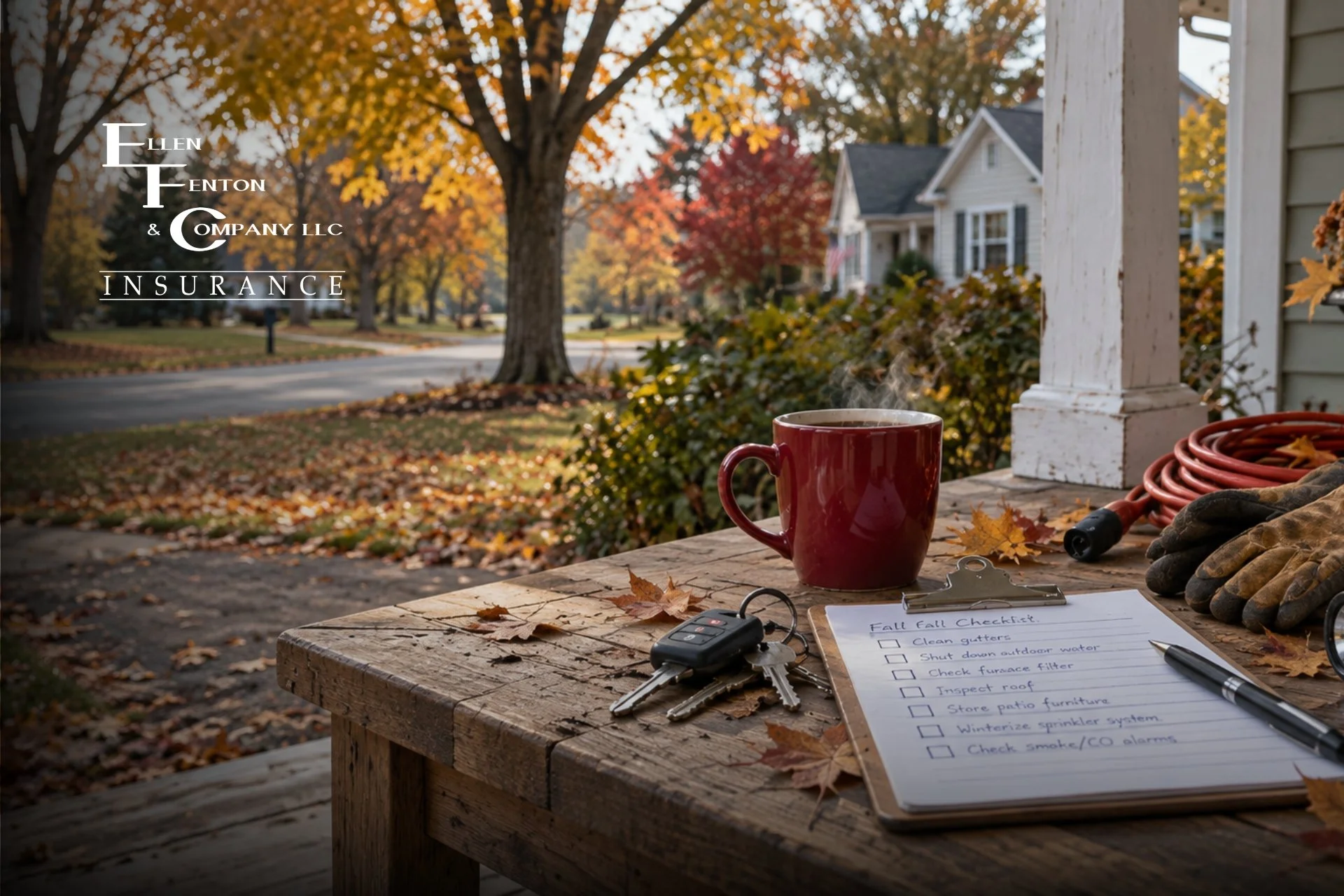
Fall in Western New York comes with a mental checklist most homeowners already know by heart.
Clean the gutters. Check the furnace. Put away the patio furniture. Make sure the snowblower starts. Find the ice scraper you swore you left in the car.
But fall home preparation is also a good time to look for changes around your home, property, and vehicles that may matter once winter arrives — including changes your insurance agent should know about.
If you’re preparing your home for colder weather, start with these practical fall maintenance steps.
What should homeowners check before winter?
Before winter, homeowners should inspect gutters and drainage, heating systems, smoke and carbon monoxide detectors, outdoor plumbing, trees and exterior property, vehicles, and any major changes made to the home during the year.
You don’t need to tackle everything in one afternoon.
Start with the areas that are most likely to create problems once temperatures drop.
1. Clean gutters and check drainage around your home
Clogged gutters can prevent rain and melting snow from draining properly away from your home.
Before leaves pile up, clear your gutters and make sure downspouts are moving water away from your foundation.
While you’re outside, take a quick look at:
Gutters that are loose or pulling away
Missing or damaged shingles
Cracked siding or trim
Areas where water is collecting near the foundation
Drainage that appears different from last year
Western New York weather changes quickly, and a small drainage issue in October can become much harder to address once snow and ice arrive.
2. Have your heating system checked before the first real cold snap
Your heating system should be inspected before you need to depend on it every day.
Depending on your home, that may mean servicing a furnace, boiler, pellet stove, fireplace, or wood-burning stove.
Fall is also a good time to:
Replace furnace filters
Clean vents and registers
Schedule chimney or flue maintenance
Check thermostats
Make sure heating equipment has adequate clearance
If you added or changed a heating source this year — such as installing a wood stove — it’s also worth mentioning that to your insurance agent.
Some home improvements can affect the way a property is insured.
3. Test smoke detectors and carbon monoxide detectors
Smoke detectors and carbon monoxide detectors should be tested regularly, especially before heating season.
As furnaces, fireplaces, generators, wood stoves, and other fuel-burning equipment start getting more use, working detectors become even more important.
Take a few minutes to test each unit and replace batteries if needed.
It is one of the simplest items on your fall home checklist — and one of the most important.
4. Prepare outdoor faucets, hoses, equipment, and furniture
Outdoor plumbing and equipment can be damaged when temperatures drop below freezing.
Before winter arrives:
Disconnect garden hoses
Drain outdoor water lines where appropriate
Shut off exterior faucets if your home requires it
Store outdoor furniture
Secure grills and lightweight outdoor items
Put tools and seasonal equipment somewhere protected
A quick walk around your property can also help you spot things you may not have noticed during summer.
5. Look at trees and branches near your home
Fall is a good time to inspect trees around your home, garage, driveway, and utility areas.
Look for visibly damaged, dead, or hanging branches that could become a problem during wind, heavy snow, or ice.
You are not trying to predict every storm.
You are simply looking for obvious changes before winter weather makes them harder to manage.
6. Get your vehicle ready for Western New York winter driving
Your house is not the only thing that needs a fall check.
Before winter driving begins, inspect:
Tire tread and pressure
Windshield wipers
Washer fluid
Battery condition
Headlights and brake lights
Brakes
Emergency supplies
Many Western New York drivers also keep blankets, gloves, a flashlight, scraper, small shovel, and basic emergency supplies in the vehicle during winter.
Hopefully, you never need them.
That is exactly why they are worth having.
7. Think about what changed at your home this year
This is the step homeowners often forget.
Your house may look roughly the same as it did last fall, but that does not mean nothing changed.
Ask yourself:
What is different about my home, property, or household compared with last year?
Maybe you:
Finished a basement
Built a garage or shed
Added a deck or porch
Installed a wood stove
Renovated a kitchen
Bought expensive equipment
Purchased a new vehicle
Added solar panels
Changed how part of your property is being used
Had someone move into or out of the household
These changes do not automatically mean your insurance needs to change.
They simply mean it may be time for a conversation.
When should you review your homeowners insurance?
A homeowners insurance review is worth considering when you make significant changes to your home, property, belongings, household, or lifestyle.
You do not have to wait until renewal.
Sometimes the best time to review your coverage is simply when life changes.
At Ellen Fenton & Company, one of the easiest questions we can ask is:
What changed this year?
Sometimes the answer is nothing.
Sometimes one small update leads to an important conversation.
And sometimes the review simply confirms that your current coverage still makes sense.
That is exactly what a good insurance relationship should do.
Your fall home checklist does not have to be complicated
Fall preparation is really about noticing things before winter forces you to notice them.
Clean what needs to be cleaned.
Service what needs to be serviced.
Look for anything that changed.
And if something about your home, vehicle, property, or household is different from last year, ask whether your insurance should reflect it.
Have an insurance question while working through your fall checklist? Contact Ellen Fenton & Company. We’re always happy to help you figure out whether a change actually matters to your coverage.
Frequently Asked Questions
What should I do to prepare my house for winter?
Before winter, homeowners should clean gutters, inspect drainage, service heating systems, test smoke and carbon monoxide detectors, prepare outdoor plumbing, inspect trees, and secure outdoor equipment.
Should I tell my insurance company about home renovations?
Major renovations, additions, new structures, heating changes, and other significant property updates may affect your homeowners insurance. It is a good idea to tell your insurance agent about substantial changes so they can determine whether your policy should be updated.
Does installing a wood stove affect homeowners insurance?
It can. Insurance requirements may vary based on the type of stove, installation, chimney or venting system, and insurer. Homeowners should contact their insurance agent when adding a wood stove or other supplemental heating source.
How often should homeowners insurance be reviewed?
A homeowners policy should generally be reviewed periodically and whenever there is a major change to your home, property, household, or valuable belongings.
Why is fall a good time to review homeowners insurance?
Fall is a natural time to review your property because homeowners are already inspecting heating systems, outdoor equipment, vehicles, and seasonal maintenance needs before winter.
Have Questions?

A practical checklist for getting your home, property, vehicle, and insurance ready before winter arrives in Western New York.